
Rolfing® — The ins and outs
Deanna Melnychuk
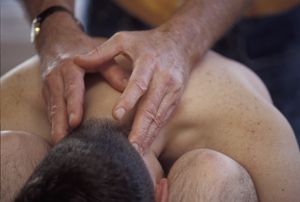
When we hear of Rolfing Structural Integration, the first thought that generally comes to mind is: but it hurts, doesn’t it?
Dr. Ida Rolf, over a period of 50 years, developed the method of Rolfing, which she called Structural Integration. Many dedicated rolfers have continued to advance this bodywork since her death in 1978. Practitioners are learning new ways of seeing the restrictions in their clients’ bodies, as there is no adherence to a recipe where one size fits all.
Each client is evaluated for his individual unique issues around retaining an upright posture with ease of movement. As rolfers evolve themselves through classes practice, they develop a touch that changes moment-to-moment to be in alignment with each client. A client needs to know he is always the person in charge; if he feels the weight of the rolfer’s hand has become painful, he simply says, “Stop.”
When we have knots in our tissues, caused by stress, long-held tensions, poor posture, injury surgery, our bodies will ache because the connective tissue (fascia) has shortened thickened. The rolfer’s touch works these knots out, but there may be discomfort in the stretching movement.
The client will sometimes say, “That hurts so good!” It is as if someone is last releasing deep body pain that was unreachable before.
The client is encouraged to breathe into the area the rolfer is touching. As he becomes completely attuned aware of his own body, he can feel the tissues releasing. A sense of lightness, fullness and/more space is felt, when the client stands up, he finds he has more energy feels taller.
If there is a hurt all, when the rolfer releases her hands, the pain is gone is replaced with a new sense of well-being. People have said, “I had chronic back pain for 20 years — now it is gone!” That seems more than a fair payoff for a few minutes of discomfort on a rolfer’s table.
In Rolfing, the tissues are lengthened, realigned softened. Results are often immediate, there is continued improvement throughout the 10-session series.
Realizing that the client is always in charge of the touch encourages people who once thought Rolfing hurt to take charge of their own lives. They discover benefits like greater flexibility, coordination, less chronic pain stress. Determine for yourself if Rolfing is the way to reclaim your body.
Deanna Melnychuk, B.Sc., is a certified advanced rolfer Rolfing® movement practitioner, licensed massage therapist, Reiki master, cranioSacral therapist reflexologist..
Reprinted from AzNetNews, Volume 28, Number 2, Apr/May 2009.